
01. Echoes of Intentions - Seeing Again
This was not the earliest form of reflection in my process of working in practice as an architectural designer. It was the first complete understanding of the echoing effects of my decisions.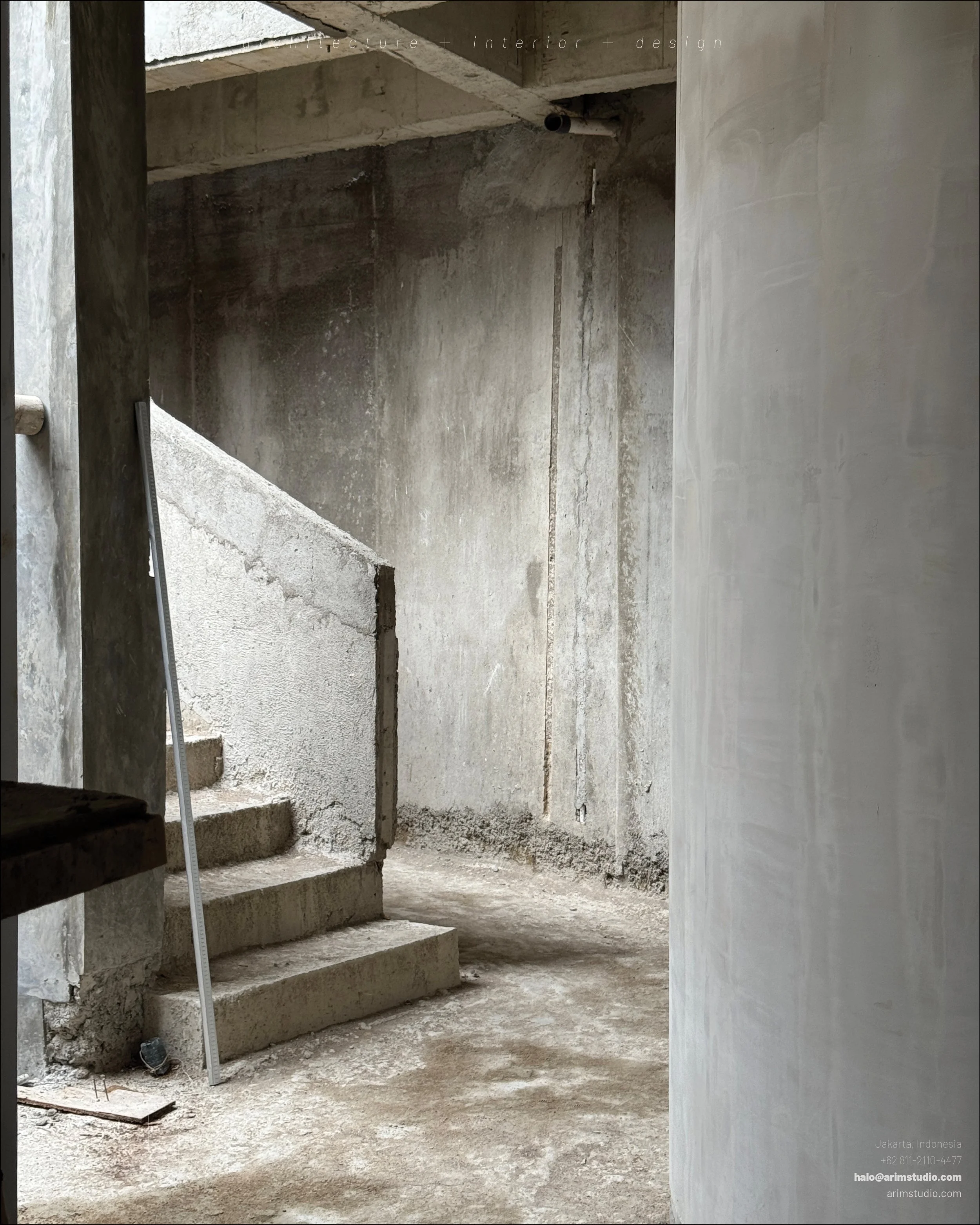
Intentions can begin from the most sincere place.We intend to bring natural light inside, we intend to improve ventilation, and we intend to respect context. But then I began to understand that intentions are not the same as results.
Intention starts with analysis.Then it continues through function, then form — wherever you choose to begin a project. We develop it into a 3D model, and our intentions begin to take shape. Renders. Presentations. Approval. Then we continue with the engineering drawings. We move toward the build details, material performance, and even the craftsmen’s skills begin to make sense.
All of these intentions and decisions in designing a building must have come from a good place (i think). I personally believe that there are no “evil architects” who only think about themselves within a project.
I believe our intentions are sincere, but what I understand is that we lack control in keeping the consequences of our intentions as we intended.
These echoes of intentions I will discuss are not tied to a specific project. They happen in every possible project — a shared experiences with my other colleagues (tagging you guys on this: Naufal, Sandika, Yus, Mas Harin, and more!).
Where it resulted in very interesting conversations (certainly you can call it a gossip) about how our own intentions can resulted in consequences we can never predict. I laughed about it most of the time, made lots of complains about it too, also finding it naïve — what I have discovered.
Why didn’t I think about those consequences, in which sometimes they are clear.
These people I have mentioned are my biggest supporters and mentors. We met and worked together at Atelier Riri – Bintaro, studio led by principal architect Riri Yakub. What I am most grateful for from working at Atelier Riri for almost 5 years is that most of my carelessness are guided by these amazing individuals and mostly Mas Riri. I could not share enough that my years working there has been the best decision I have made in my career.
Okay back to the Echoes.
So, from my simple understanding, the same intentions can result in completely different outcomes. Some of the examples I personally have experienced;
Echo 01 — Air That Moved, but Not Enough
Surely we all know this by now. Some of you who might call yourselves architects — or sorry, architectural designers, such as myself — have heard about the importance of “cross ventilation” here in our tropical climate country.
Yes, it is very important. I could not agree more. A textbook solution to heat issues within a building.
I have used it several times throughout different projects, with the intention of creating a network of openings that encourage cross-ventilation flow through a certain void. It can be placed at the heart of a house, allowing air to travel across different spaces.
Most of them work.
But it echoes in which, it was not enough.
When your electricity bill is not an issue and you can turn your AC on 24 hours a day, obviously you would prefer something more controllable to your liking. Surely we would think, yes, but you need fresh air! Girl, Jakarta is one of the most polluted cities in the world — which fresh air are we talking about? (Sorry, that’s kind of harsh but you get what I mean.)
What I learned from this is not that cross ventilation is wrong, nor that passive strategies are naïve.
It is that design intentions must negotiate with lifestyle and expectations.
Sustainability cannot rely on theory alone. It must respond to how people actually behave — which, as we all know, is often the hardest thing to change.
Echo 02 — Openings That Were Closed
At the early stage of some projects, many clients specifically ask for an open house concept. We gladly respond because this “trend” of having big windows and lots of natural light is the result of years of architects advocating for the importance of natural light (don’t quote me on this LOL).
Big windows and openings are then carefully placed, based on our knowledge, to ensure that not too much direct sunlight enters the house. The openness of the plan allows us to blur restrictive boundaries, create indoor-outdoor continuity, and, of course, achieve something visually pleasing.
But later on, those blurred boundaries between outside and inside, funny enough, invite a lot of
bugs
What was once a design aspiration, which both architect and owner agreed upon, slowly became a daily inconvenience. The decision to enclose most of those openings later on was practical
And practicality, most of the time, wins.
This echo allowed me to understand that some spatial concepts equal a lifestyle commitment. If the owner of the house is not fully prepared for its consequences, then the concept we brought forward is lost.
Design may propose a way of living, but living ultimately decides what remains open and what does not.
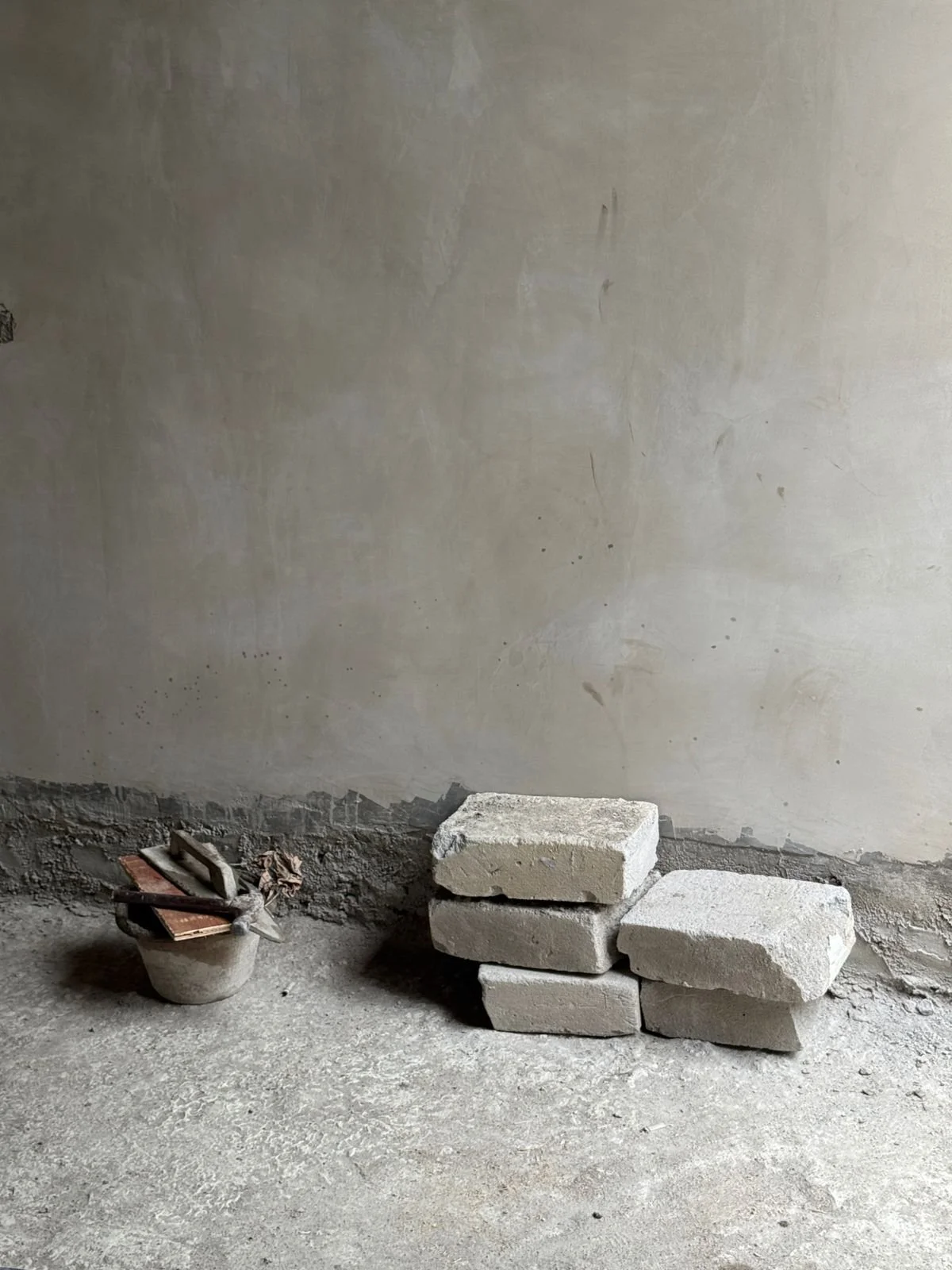
Echo 03 — A Skin That Froze Mid-Gesture
Our favorite textbook response toward light and privacy control in tropical climates that works exceptionally well is second skin, which can be placed over certain openings.
Not only is it a great response to functional needs, but it also serves as a decorative element of the building’s overall form. Additionally, it can express the building’s adaptability when we place a hinge mechanism that allows it to move and adjust.
Second skin is perhaps the clearest echo of all that I have experimented with — where the right intention can be filtered out through unavoidable constraints such as budget, contractors’ skills, and habits.
Sometimes within a project that has this architectural element within its design, there are unavoidable moments when we have to fight hard to maintain it.
Where in this case, a second skin that functionally works as privacy control, but whose hinge mechanism allows it to be adjusted when a space needs more natural light. It was also an important focal point of the overall building facade.
The element was right.
The intentions are clear, but come the “usual constraints” of a project.
Budget.
So in the end, we had to compromise.
We looked for ways to find a balanced outcome that would benefit each stakeholder in the project, while still serving the purpose of the second skin over an opening.
We decide on cutting the hinge mechanism, and we lost its mobility.
These echoes are not signs of failure, simply evidence of reality. These projects have taught me that sincere intentions are not fixed strategies drawn in plans and sections.
They are negotiations, compromises, and questions of feasibility.
As architectural designers, our intentions must survive construction, budget constraints, and daily use.
If our ideas are not adaptable, they will simply be removed and seen as unimportant.
In the end, architecture and design are not about control.
They are about responsibility and the willingness to learn from what have to remain.
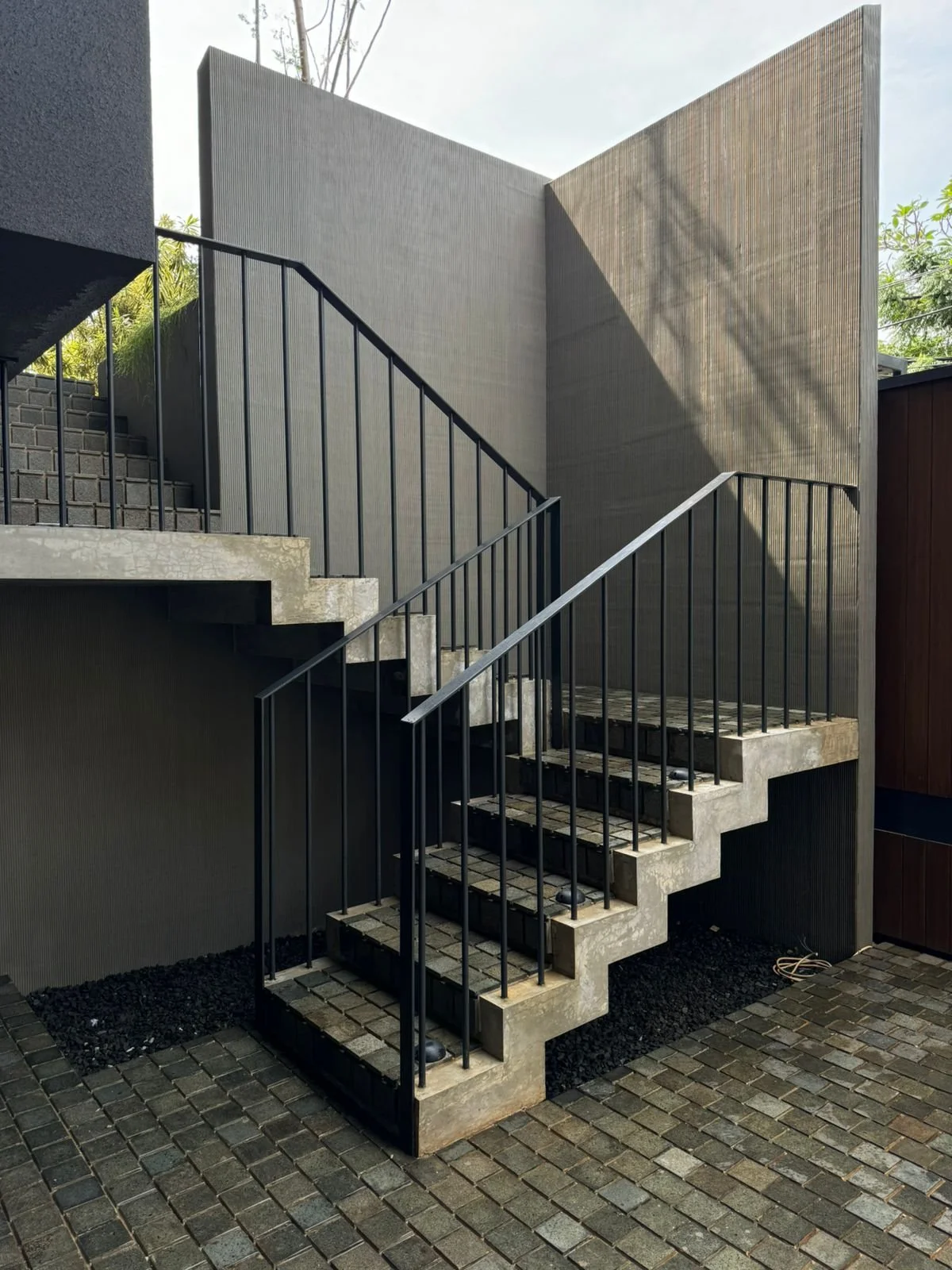
Looking back at these echoes, I began to understand that good intentions in design cannot be justified only when the drawings are finished.
The function and form of our intentions continue to be tested through all the processes and echoes that follow. I cannot even bring myself to mention each of those processes, because I am sure — now more than ever — that I would miss some of them. Though certainly, even worse, there are processes and echoes I am not yet aware of.
As Mas Riri once said to me, five years in practice is not that long in this career being an architectural designer. There is still so much more to learn and there will be many more “rollercoasters” in life and in practice.
So through this first essay Echoes of Intentions, from the series of Seeing Again, I feel even more humbled by the process I have gone through.
To be more brave and confident in facing the upcoming echoes of my intentions.
Ps: Took me around 3 days to write this essay, though with lots of help of AI tools to correct my grammars haha! This has been a lot of fun, taking my mind off from stressful rhythm of projects. When was the last time I wrote an essay? Probably somewhere around the final year of uni, definitely did not enjoy those moments. I probably still have them though, I think I wrote an essay titled “Humble Architecture”, surely its trash if I try to read it again.
I know, I did make a poll to maybe write these in Bahasa Indonesia, and some of you agrees, but guys, when will you learn english then? I’m mentioning Anggi and Arya the individuals that requested this in bahasa. Hey, use ChatGpt please, its taking too long to rewrite this!.